Fr / En

Antti Lovag

Legacy and Influence

"I work like a tailor; I make custom envelopes—envelopes that can be shaped however you like."

- Antti Lovag

Antti Lovag
, the "habitologist"

Antti Lovag did not define himself as an architect, but as a “habitatologist”: a creator of forms designed for the body, everyday uses, and contemporary conviviality. His work is guided by a humanistic vision in which the living environment becomes a natural extension of the human being, shaped by the means and sensibilities of his time.

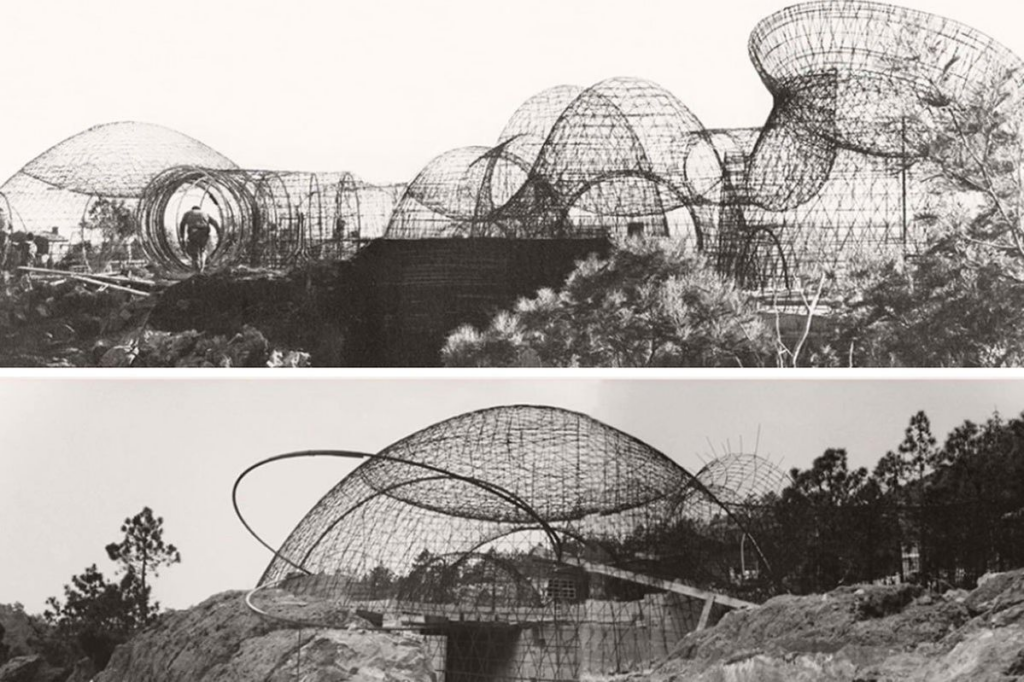
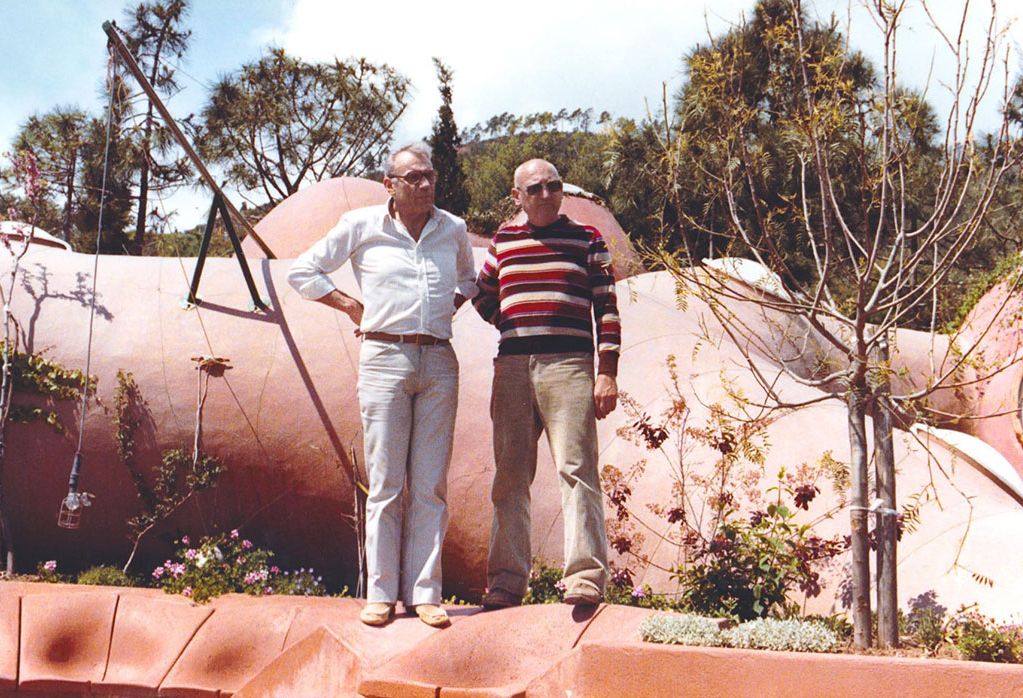
Of Hungarian origin and trained under Jean Prouvé, Antti Lovag developed an architectural language at a very early stage that was inspired by organic forms and living things, based on an essential triad: nature, humanity, and the home. He rejected right angles in favor of curves, which he considered the most accurate geometry of the body and the landscape. In 1971, he accepted a commission from Pierre Bernard to design a visionary 900 m² residence in Théoule-sur-Mer.

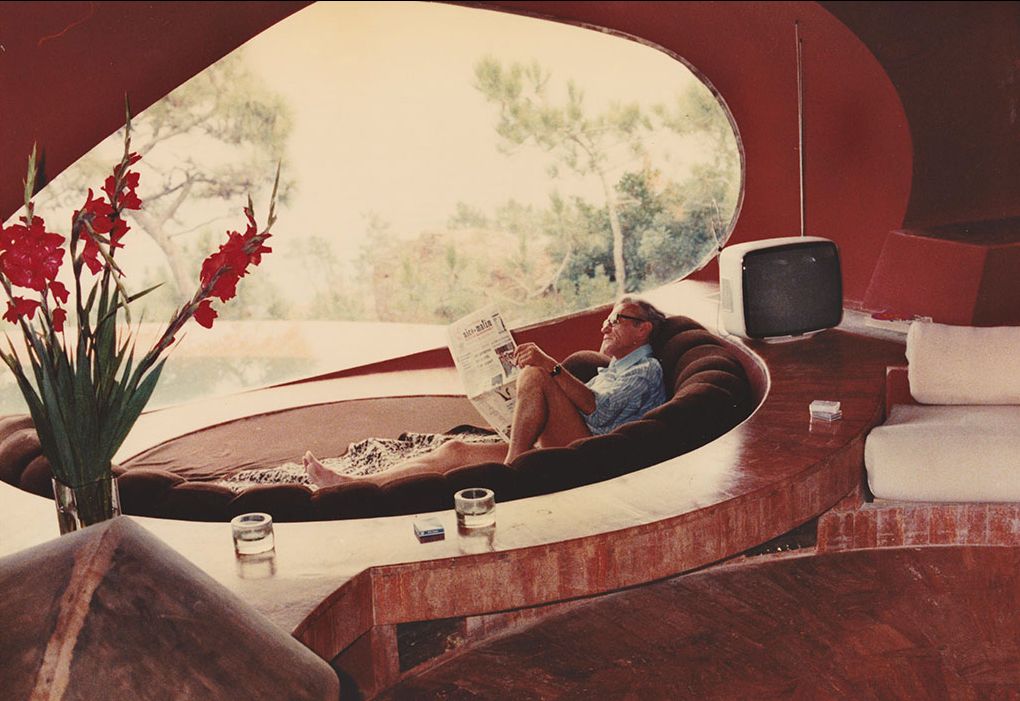
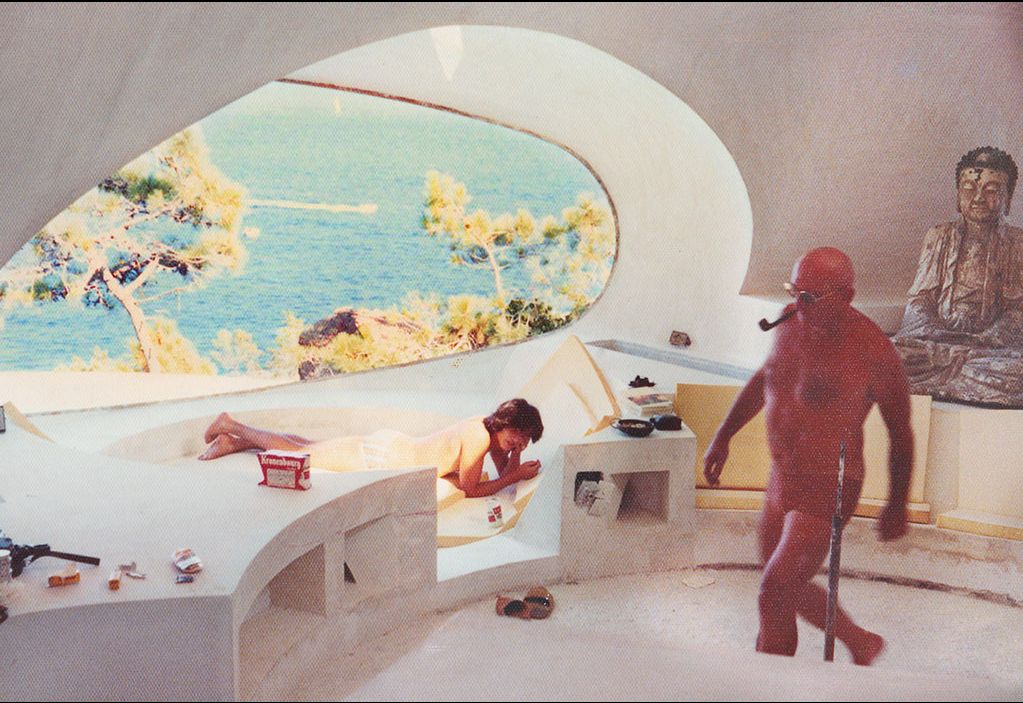
The Maison Bernard, which became iconic under the name Maison Bulles, emerged as an architectural manifesto. More than just a house, it was a veritable laboratory of forms, uses, and sensations.

A visionary and futurist, Antti Lovag anticipated major contemporary concerns: harmony with nature, emotional comfort, the fluidity of spaces, and architecture designed first and foremost for people.

The Maison Bernard embodies this philosophy: a place that does not impose itself on the landscape, but rather engages in a dialogue with it, in a sensitive, organic, and timeless relationship.

: A Portrait of a Visionary

Born in Hungary in 1920, Antti Lovag moved to France after World War II and developed a unique approach to architecture that was deeply critical of the dominant modernist models.

As early as the 1960s, he embarked on experimental research into curved forms and spherical structures, convinced that housing should adapt to people and not the other way around. His work is part of the organic architecture movement and emphasizes free-form volumes inspired by natural shapes and the topography of the landscape.

With the Maison Bernard, designed in the 1970s, he created the world’s first “bubble house,” ushering in a new way of conceiving domestic space

Habitology: Living Rather Than Building

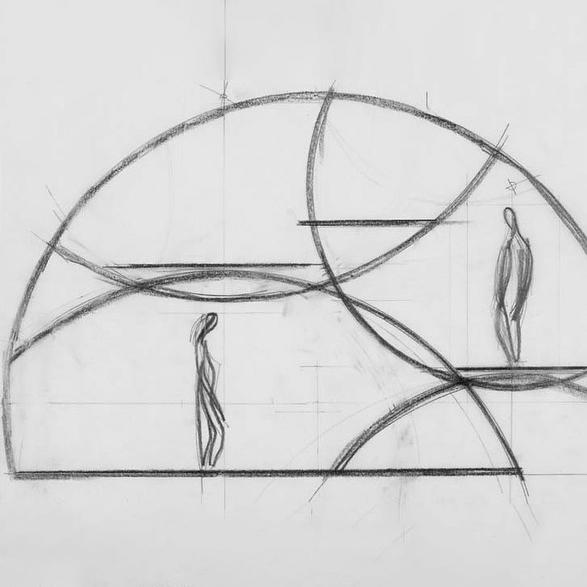
Antti Lovag liked to point out that he was not an architect but a “habitatologist.” For him, architecture had to be rooted in the human body, its movements, and its fundamental needs. Spaces are no longer organized according to rigid plans but unfold freely, like a living organism.

In this approach, each volume corresponds to a function, a gesture, or a moment in daily life. Circulation flows seamlessly, rooms transform into spheres or alcoves, and the living space is constructed like an interior landscape.

Habitology thus proposes a form of architecture that is freer, more sensitive, and profoundly human.


's Organic Architecture

The architecture developed by Antti Lovag is distinguished by its use of spherical volumes and curved forms that break with traditional geometries. These forms, inspired by nature, create continuous, enveloping spaces where the body’s movement guides the organization of the volumes. The “bubble houses” have thus become the symbol of this architectural exploration.

The Maison Bernard, the first project of its kind, marked the beginning of a series of experiments that would give rise to some of the most unique architectural works in the Mediterranean landscape.

In these spaces, architecture is no longer merely a framework—it becomes an experience.

Legacy and Influence

A philosophy that remains relevant today.

Today, Antti Lovag’s work continues to inspire architects, designers, and artists around the world. His exploration of the relationship between the body, space, and nature foreshadows many contemporary concerns: fluidity of space, integration into the landscape, and sensory architecture.

More than just a style, his work represents a profound reflection on how architecture can support human life.

Maison Bernard carries on this legacy by bringing Antti Lovag’s vision to life and affirming the unique place his work holds in the history of architecture.

© 2026 La Maison Bernard